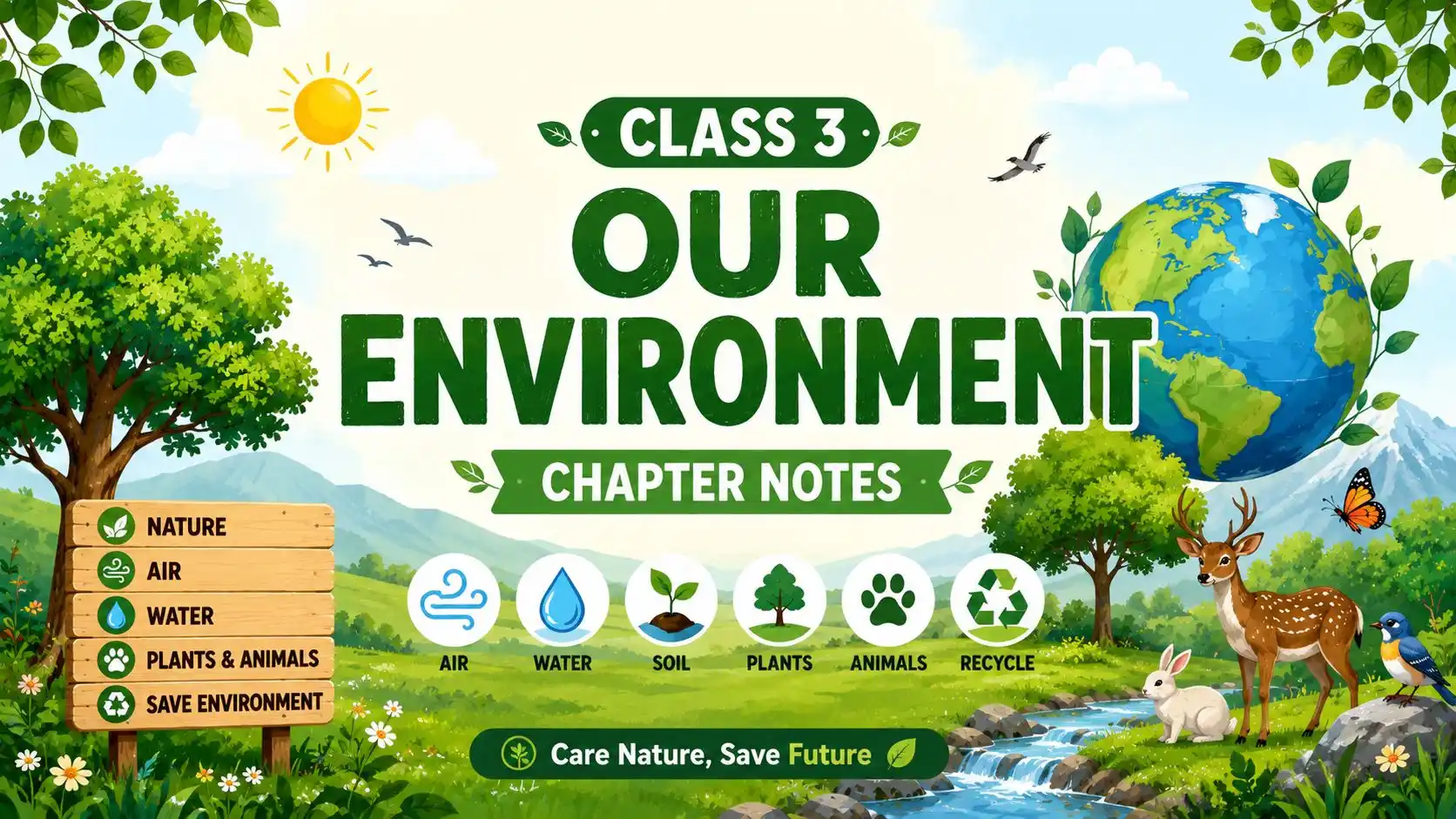
Class 3 Our Environment Chapter Notes are very important for students because this chapter helps us understand the world around us. We see trees, plants, animals, rivers, mountains, air, water, and many other things every day. All these things together form our environment.
Hello, Students and Parents!
I am Kids Teacher Shilki, and today I have prepared a complete, easy-to-follow guide to Class 3 Our Environment Chapter Notes. This article is written in very simple English so that every child can easily understand the chapter and prepare well for school exams.
In this detailed guide, you will learn:
✔ Meaning of Environment
✔ Types of Environment
✔ Components of Environment
✔ Importance of Environment
✔ Pollution and its Types
✔ Ways to Protect the Environment
✔ Interesting Facts
✔ Important Questions and Answers
✔ Fun Activities and Worksheets Ideas
✔ Exam Tips for Class 3 Students
Let us start learning.
What is the environment?
The word ” environment ” means everything around us.
We are surrounded by many living and non-living things every day. These things help us live comfortably and safely.
Our environment includes:
- Air
- Water
- Soil
- Trees
- Plants
- Animals
- Birds
- Mountains
- Rivers
- Sunlight
- Human beings
- Houses
- Roads
- Schools
In simple words:
The environment is everything that surrounds us and affects our lives.
For example:
When you breathe fresh air, drink water, sit under a tree, or play in a park, you are using different parts of the environment.
Understanding Environment with a Simple Example
Imagine you are sitting in a garden.
Around you, there are:
- Green grass
- Trees
- Flowers
- Butterflies
- Birds
- Sunlight
- Fresh air
- Soil
All these things together make up your environment.
Without these things, life would become difficult.
That is why the environment is very important for every living being.
Types of Environment
According to Class 3 Our Environment Chapter Notes, there are two main types of environment.
1. Natural Environment
The natural environment includes everything created by nature.
Examples:
- Mountains
- Rivers
- Oceans
- Forests
- Trees
- Animals
- Birds
- Air
- Water
- Sunlight
Nature provides everything needed for life.
Examples of the Natural Environment
- The Himalayan Mountains
- Forests full of animals
- Rivers flowing with water
- Green trees and plants
Humans do not make these.
2. Man-Made Environment
The man-made environment includes things created by people.
Examples:
- Houses
- Schools
- Roads
- Bridges
- Cars
- Hospitals
- Parks
- Factories
Humans create these things to make life easier.
Examples of Man-Made Environment
- Your school building
- A playground
- A shopping mall
- A bridge over a river
These things are made by people, not by nature.
Components of the Environment
The environment has two important components.
1. Biotic Components (Living Things)
The word “Biotic” means living.
These are things that can:
- Grow
- Breathe
- Reproduce
- Move
Examples:
- Humans
- Plants
- Trees
- Animals
- Birds
- Insects
- Fish
Examples Around Us
A dog in your house, a sparrow on a tree, and a mango plant in your garden are all biotic components.
2. Abiotic Components (Non-Living Things)
The word “Abiotic” means non-living.
These things do not grow or reproduce.
Examples:
- Air
- Water
- Soil
- Rocks
- Sunlight
- Temperature
These non-living things help living things survive.
Without water and air, plants and animals cannot live.
Relationship Between Living and Non-Living Things
Living and non-living things depend on each other.
For example:
Plants Need:
- Water
- Soil
- Sunlight
- Air
Animals Need:
- Water
- Food
- Air
Humans Need:
- Food
- Water
- Air
- Shelter
This shows that every part of the environment is connected.
Importance of the Environment
According to Class 3 Our Environment Chapter Notes, the environment is essential for life.
Let us understand why.
It Gives Us Air
We need oxygen to breathe.
Trees and plants help provide fresh oxygen.
Without air, humans and animals cannot survive.
It Gives Us Water
Water is needed for:
- Drinking
- Cooking
- Cleaning
- Farming
Every living thing needs water.
It Gives Us Food
Many foods come from nature.
Examples:
- Fruits
- Vegetables
- Grains
- Milk
- Honey
Farmers grow crops using soil, water, and sunlight.
It Gives Us Shelter
Wood, soil, stones, and other natural resources help us build homes.
It Maintains Balance in Nature
Plants, animals, birds, and humans depend on each other.
This natural balance keeps Earth healthy.
Natural Resources
Natural resources are gifts from nature.
They help us meet our daily needs.
Examples include:
- Air
- Water
- Soil
- Sunlight
- Minerals
- Forests
We should use natural resources carefully because some resources are limited.
Plants and Environment
Plants are one of the most important parts of our environment.
Plants help us in many ways:
- Give oxygen
- Provide food
- Prevent soil erosion
- Give medicines
- Provide shade
- Keep the air clean
Why Trees Are Important
Trees:
- Absorb carbon dioxide
- Release oxygen
- Reduce pollution
- Provide homes for birds
That is why we should plant more trees.
Animals and Environment
Animals are also an important part of nature.
Different animals help the environment in different ways.
Examples:
- Bees help in pollination.
- Earthworms make soil fertile.
- Birds spread seeds.
- Cows provide milk.
Every animal has an important role in nature.
What is Pollution?
Pollution means making the environment dirty and unsafe.
When harmful substances enter air, water, or land, pollution occurs.
Pollution affects:
- Humans
- Animals
- Birds
- Plants
It can cause diseases and damage nature.
Types of Pollution
1. Air Pollution
Air pollution happens when smoke and harmful gases mix with air.
Causes of Air Pollution
- Vehicle smoke
- Factory smoke
- Burning garbage
- Firecrackers
Effects of Air Pollution
- Breathing problems
- Cough and asthma
- Dirty air
- Global warming
2. Water Pollution
Water pollution occurs when water becomes dirty.
Causes of Water Pollution
- Plastic waste
- Factory waste
- Sewage water
- Garbage thrown into rivers
Effects of Water Pollution
- Death of a fish
- Dirty drinking water
- Spread of diseases
3. Land Pollution
Land pollution happens when waste is thrown on the land.
Causes of Land Pollution
- Plastic bags
- Garbage dumping
- Industrial waste
Effects of Land Pollution
- Dirty surroundings
- Bad smell
- Harm to animals
- Reduced soil fertility
4. Noise Pollution
Noise pollution is caused by very loud sounds.
Examples:
- Loudspeakers
- Firecrackers
- Traffic horns
Effects
- Stress
- Headache
- Disturbed sleep
Global Warming (Easy Explanation)
When pollution increases, Earth’s temperature slowly rises.
This is called Global Warming.
Global warming can cause:
- Hotter summers
- Melting glaciers
- Less rainfall in some places
- Climate changes
Planting trees can help reduce global warming.
For additional learning, students can explore environmental education resources from the UNEP (United Nations Environment Programme) and National Geographic Kids.
How Can We Protect Our Environment?
Protecting nature is everyone’s responsibility.
Plant More Trees
Trees help clean the air and make the Earth green.
Save Water
- Turn off taps properly.
- Do not waste water.
- Use only the required amount.
Save Electricity
- Switch off lights when not needed.
- Turn off fans and appliances after use.
Use Dustbins
Always throw garbage in dustbins.
Never litter roads, parks, or rivers.
Reduce Plastic Usage
Use:
- Cloth bags
- Reusable bottles
- Reusable containers
Avoid single-use plastics.
Follow the 3Rs
Reduce
Use fewer unnecessary items.
Reuse
Use items again whenever possible.
Recycle
Recycle paper, plastic, metal, and glass.
Walk or Use Public Transport
Walking and cycling help reduce air pollution.
Good Environmental Habits for Students
Students can help protect the environment through simple habits.
- Keep your classroom clean.
- Do not waste paper.
- Save water.
- Water plants regularly.
- Do not pluck flowers unnecessarily.
- Use both sides of notebook pages.
- Carry a reusable water bottle.
Small habits create big changes.
Interesting Facts About the Environment
- Trees can live for hundreds of years.
- A mature tree produces oxygen for many people.
- Earth is the only known planet with life.
- Rainforests are called the lungs of the Earth.
- Water covers about 71% of Earth’s surface.
- Bees help grow many fruits and vegetables.
- Plastic takes hundreds of years to decompose.
Class 3 Our Environment Chapter Notes – Important Points to Remember
- Environment means everything around us.
- The environment includes living and non-living things.
- The natural environment is created by nature.
- A man-made environment is created by humans.
- Biotic means living things.
- Abiotic means non-living things.
- Pollution harms nature.
- Trees are very important.
- Water should be saved.
- Everyone should protect the environment.
Diagram for Easy Understanding
Environment
Environment
│
├── Natural Environment
│   ├── Trees
│   ├── Rivers
│   ├── Mountains
│   └── Animals
│
└── Man-Made Environment
    ├── Houses
    ├── Schools
    ├── Roads
    └── Vehicles
Important Questions and Answers of Class 3: Our Environment Chapter Notes
Q1. What is the environment?
Answer: The environment is everything around us, including air, water, land, plants, animals, and people.
Q2. Name the two types of environment.
Answer: Natural Environment and Man-made Environment.
Q3. What are biotic components?
Answer: Biotic components are living things such as plants, animals, birds, and human beings.
Q4. What are abiotic components?
Answer: Abiotic components are non-living things such as air, water, soil, and sunlight.
Q5. What is pollution?
Answer: Pollution is the contamination of the environment that makes it dirty and harmful.
Q6. Name four types of pollution.
Answer: Air pollution, Water pollution, Land pollution, and Noise pollution.
Q7. Why are trees important?
Answer: Trees provide oxygen, food, shade, and help reduce pollution.
Q8. How can students protect the environment?
Answer: Students can plant trees, save water, reduce waste, and keep their surroundings clean.
Fun Activities for Students
Activity 1: Plant a Seed
Plant a seed in a pot and observe its growth every day.
Activity 2: Save Water Chart
Create a chart showing ways to save water.
Activity 3: Pollution Poster
Draw different types of pollution and write solutions.
Activity 4: Nature Walk
Visit a park and identify:
- Trees
- Birds
- Flowers
- Insects
Activity 5: Recycling Project
Make a pen stand using old cardboard or waste materials.
Download Class 3 Our Environment Chapter Notes in Simple English below button:

Conclusion
Class 3 Our Environment Chapter Notes help students understand the importance of nature and the role we play in protecting it. The environment provides us with air, water, food, and shelter. Without a healthy environment, life on Earth would not be possible.
As responsible students, we should develop good habits such as saving water, planting trees, reducing plastic use, and keeping our surroundings clean. Even small actions can make a big difference when everyone participates.
Parents should encourage children to observe nature, participate in environmental activities, and learn through real-life examples. This makes learning more enjoyable and meaningful.
I hope these Class 3 Our Environment Chapter Notes help you understand the chapter easily and score excellent marks in your exams.
With Love and Best Wishes,
Kids Teacher Shilki 🌱📚